Moving Beyond the Tea Bag
.jpg)
Herbal teas are an enjoyable way to support overall health, yet many people rarely experience the full nutritional value that herbs can offer. By moving beyond the tea bag, and learning how to prepare herbal infusions and decoctions, it is possible to extract more flavor and nutrients from herbs. With a few simple techniques, anyone can create nourishing herbal beverages at home.
When most people think of herbal tea, their mind quickly rests on a steaming mug with a dainty tea bag resting on the side. While this image may be cozy, the reality can be a lackluster experience. The quick steep at a restaurant, as well as the limited quantity of herbs within the bag, do not lead to a flavorful and well-developed cuppa; let alone one that has significant nutritive value.
Why Teabags often Fall Short
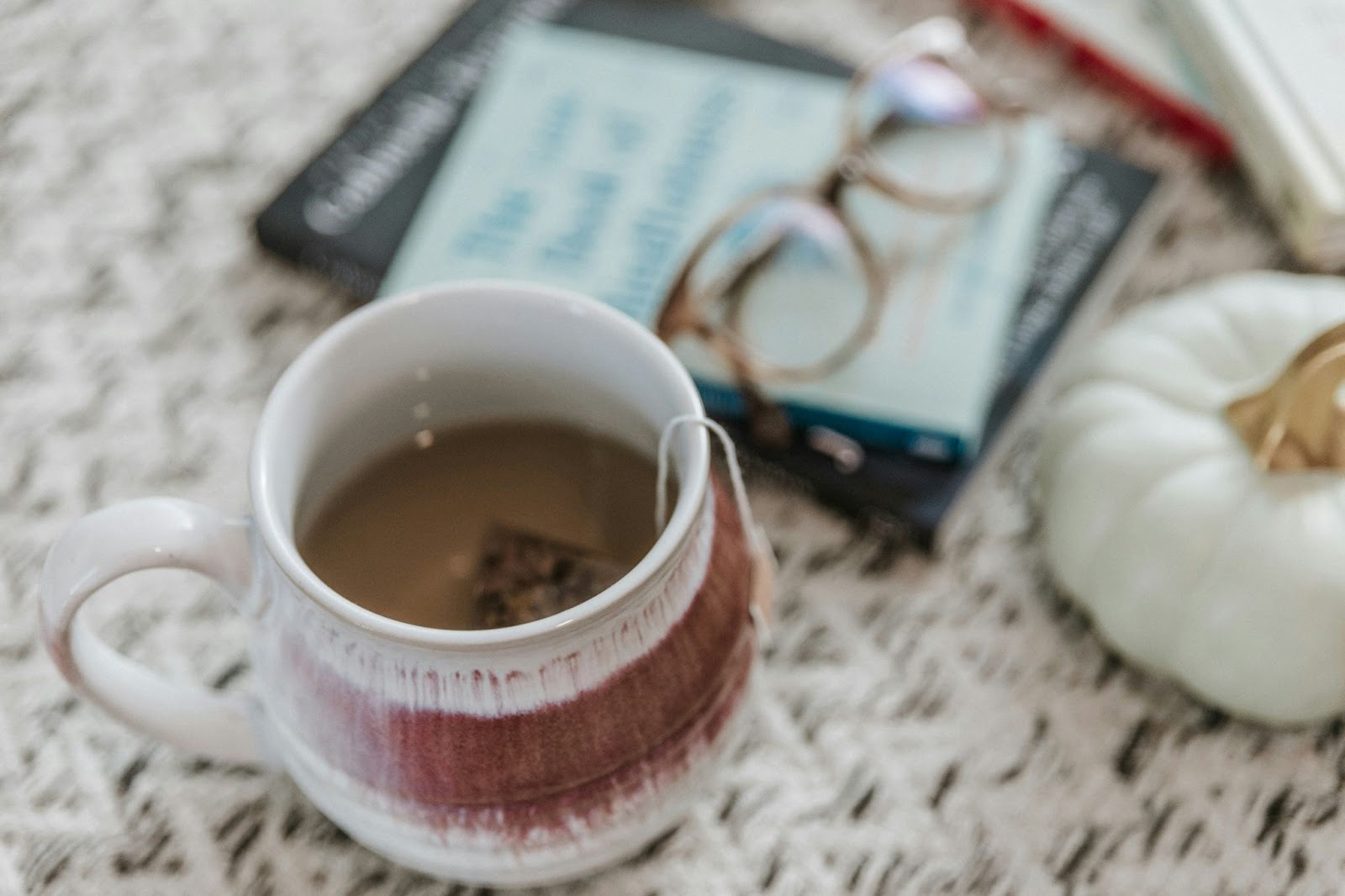
While there are many different opinions on preparing herbal teas, infusions and decoctions with bulk herbs tend to be more flavorful as well as nutrient dense due to the increased amount of herb used and the length of time for steeping, in comparison to using tea bags.
Comparing Tea bags with Infusions:
Tea Bags
- 1–3.5 grams of herbs
- Steep 3–5 minutes (up to 15)
- Quick, light extraction
Infusion
- 1 oz (28.35 grams) per quart
- Steep 4–8 hours
- Deep, nutrient-rich extraction
A herbal infusion is typically made with approximately 28 grams of a herbal blend in 32 oz of water, compared to 4-14 grams with the standard tea bag. Going further, the herbs then steep for 4–8 hours, instead of 5–15 minutes, thus allowing a further deepening of both flavor and nutritional content. Bottomline, big difference!!
When to Infuse and when to Decoct
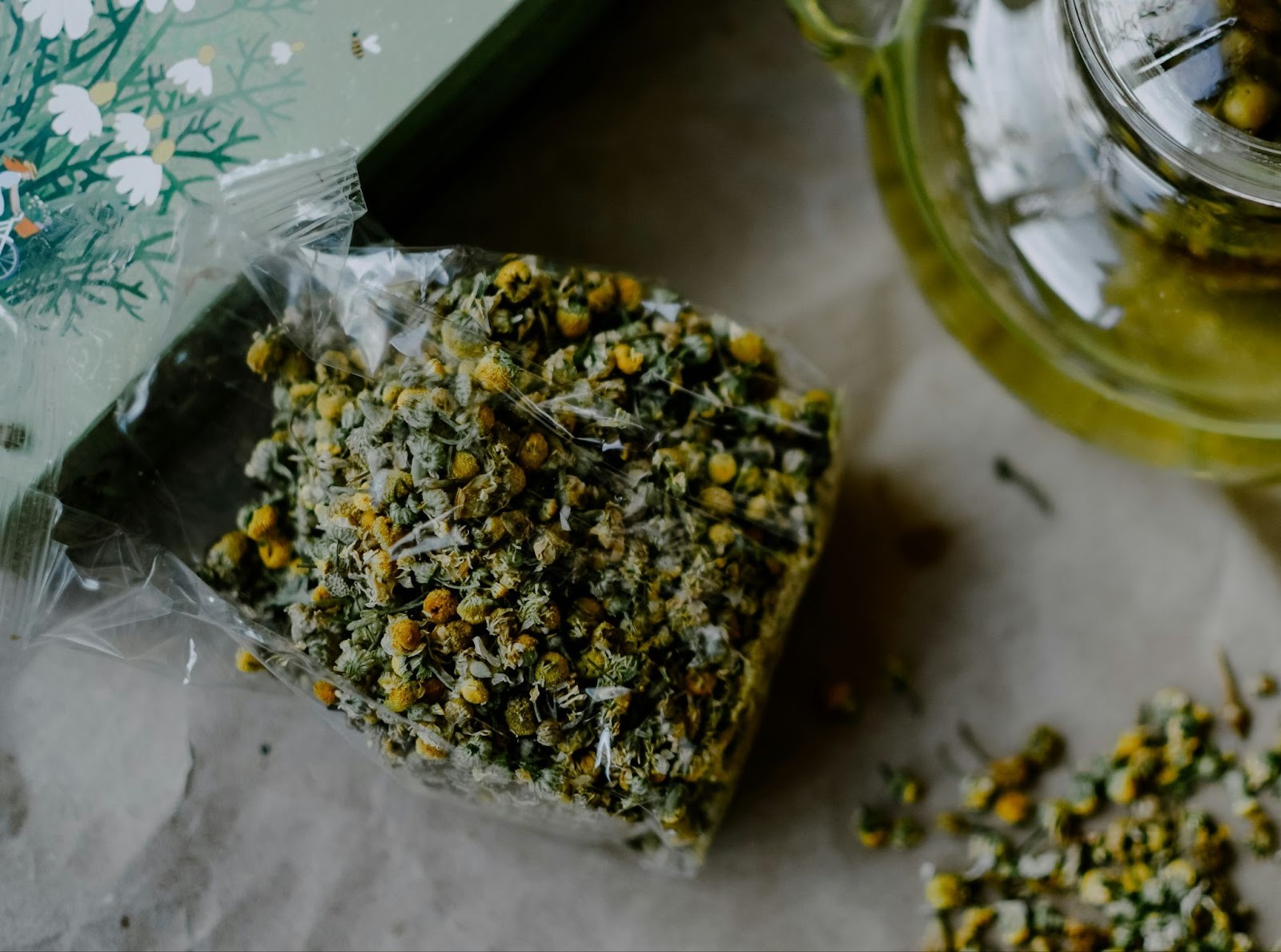
Infusions are created with flowers, leaves, and the powdered form of the plant…in essence, material that is more delicate. Decoctions, on the other hand, are reserved for bark, roots, and seeds.
In simple terms:
- Infusions → leaves, flowers, delicate plant parts
- Decoctions → roots, bark, seeds, dense materials
Infusions can be brewed with hot or cold water, while decoctions are gently heated, as the heat breaks down the more dense material. In some cases, a blend will have both delicate plant matter, as well as roots or bark. In this case, the more substantial material can be decocted; removed from the heat; and then the more delicate herbs added to be infused.
Cold Water Infusion Method
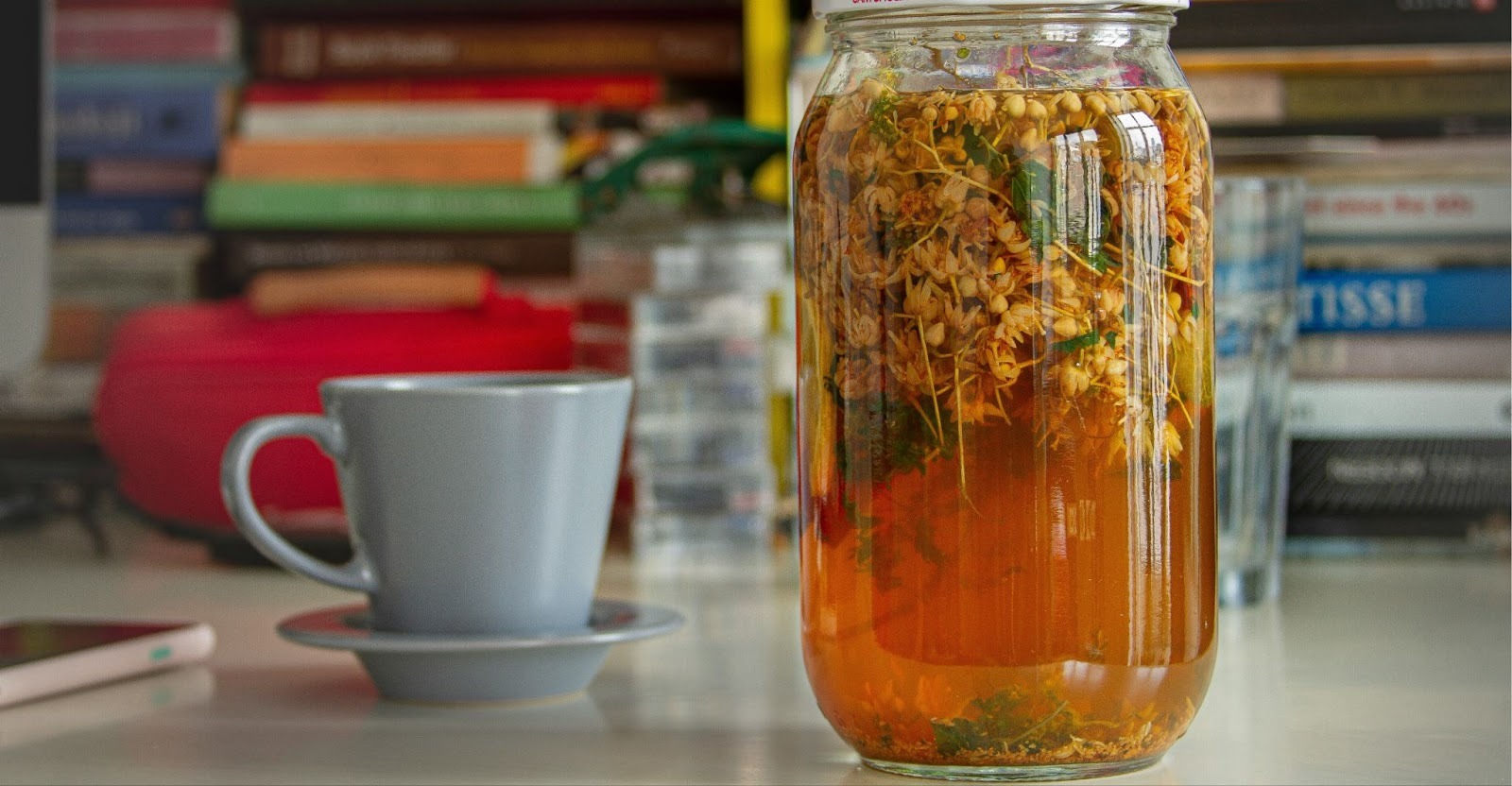
While many herbs have an affinity with heated water to extract medicinal constituents, those with more mucilage, aromatic components, and/or essential oils tend to fare better with a cold infusion initially (1), and then gently heated.
Basic method:
- Use 1 oz (by weight) of dried herb
- Add to 32 oz (by volume) of water
- A quart jar works well
A scale is handy for some, though with time, one will get a feel for the amount of herbs to use and may no longer need this, opting to "wing it." With time I have grown to learn which herbs I use roughly a teaspoon per cup…and which herbs I put in a virtual handful.
- Let tea brew overnight, for 8 hours
- Strain
- Sweeten if desired and gently heat
Heated Water Infusion Method
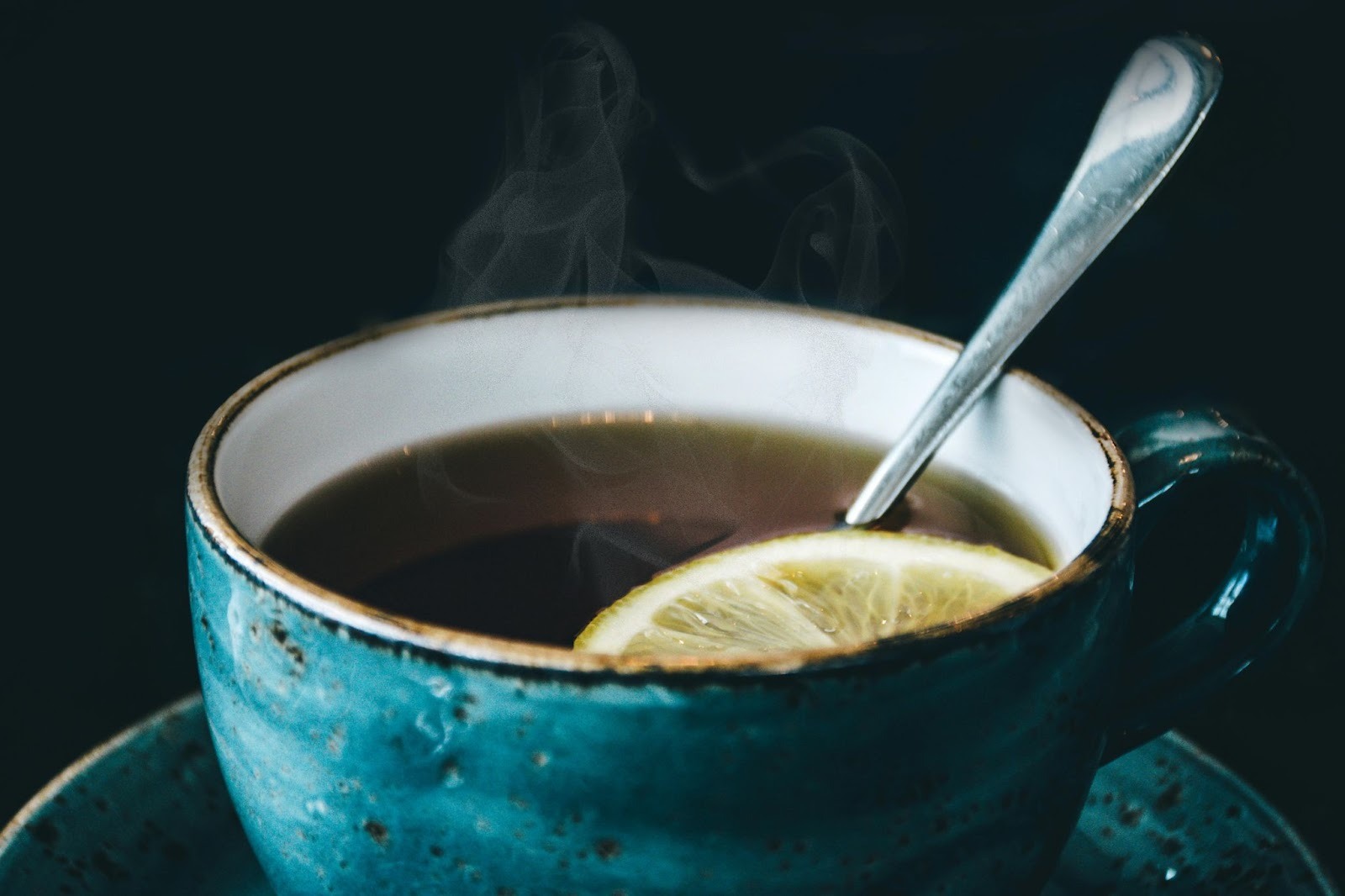
Water that is heated but still under boiling seems to be a good compromise of coaxing out some constituents with warmth, while preserving more delicate components. I tend to heat to gently simmering.
One approach:
- Heat the desired amount of water in a soup pot
- Remove from heat once reaches gentle simmer
- Add herbal material, gently stir, and cover
- Let steep overnight or for 8 hours
If herbs which have an affinity with cold water are to be incorporated, they can be added after the water has cooled down.
Decoction Method
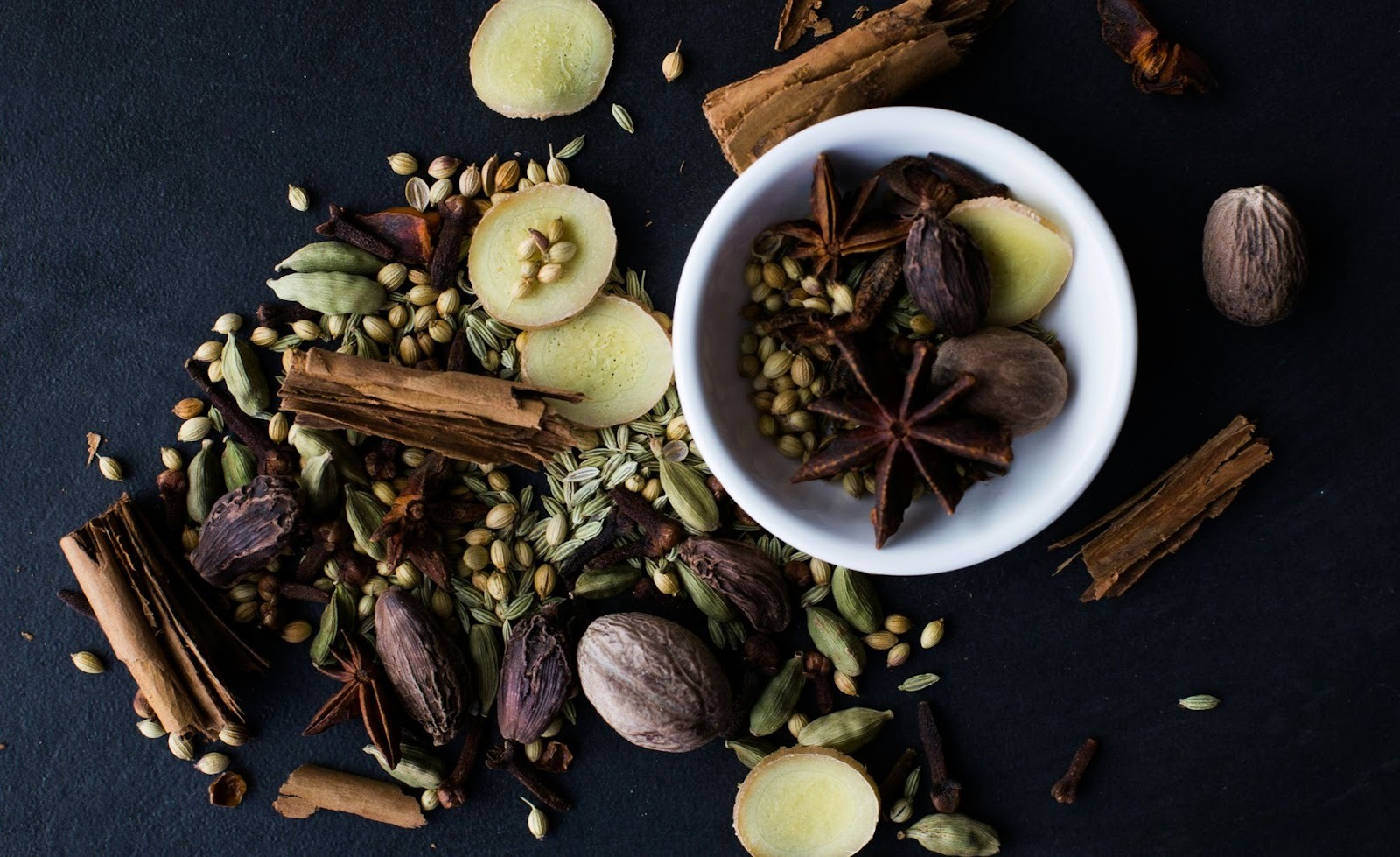
Decoctions are the ideal preparation for more dense plant material such as bark, roots, and seeds as the heat penetrates into the more fibrous material, extracting the healing components into the water.
Examples of decoctions are masala chai, as well as fresh ginger root tea. Ginger is an herb that I regularly use the fresh version of, as the end product has a very different taste than a dried form.
Decoctions can also be used to make fomentations, as well as herbal syrups.
A standard recipe for a decoction is:
- Place 1 ounce of dried herbs (by weight) in a pot
- Pour 1 quart of water over the herbs
- Gently simmer for 30–40 minutes
- Remove from heat and let steep for one hour
- Strain, sweeten if desired, and enjoy
How to Formulate Herbal Tea Blends
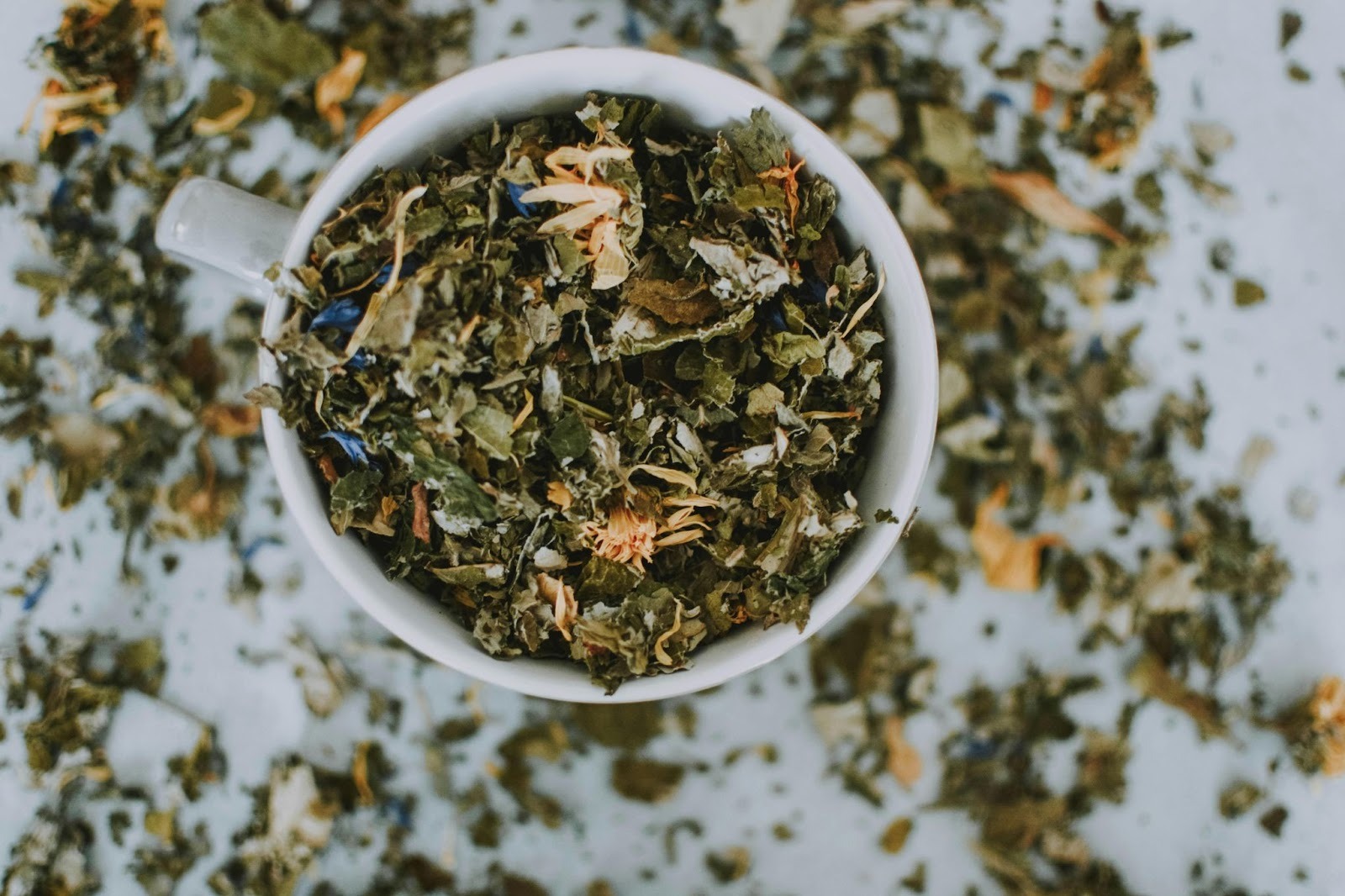
Herbal blends can be created using:
- Volume, ie a cup of nettles and a ½ tsp of licorice
- By weight, 1 oz of nettles and .25 oz licorice
- By parts, 4 parts nettles to ½ part licorice
At first I felt hindered by the weighted measurement and the need for the scale. It felt like one more thing to purchase, and one more thing to use. Now that I regularly create herbal recipes, I more fully appreciate the accuracy that a scale brings. This is especially helpful when working with different forms of herbs.
I personally find that the parts method works best using weight vs volume, as some herbs can be extremely light and yet take up a good deal of volume. Airier herbs such as mullein are an example of this. Herbs can also vary in size due to the form that they are in. For instance powdered slippery elm is going to be much more dense than cut and sifted slippery elm. Knowing the actual weight helps the herbalist work with whichever form of a given herb is on hand.
Working with the actual weight of a herb, finding a combination that is enjoyable or effective, and then blending allows the recipe to be easily produced again and again. Admittedly, I tend to “wing” it a bit, and toss in a bit of this, and a bit of that. However, I have taken the time to play around with different herbal combinations, and for the sake of being able to replicate the formula, have measured out herbs by weight and written down the recipe.
The beauty of using parts by weight, is that the amount of herbs used, can easily be increased across the board. For instance if a tea blend is 4 parts to 2 parts to 1 part (by weight); one could prepare a tea using 1oz of the first herb, .5 ounce of the second herb and .25 ounce of the 3rd herb ( with the parts being .25 oz), or for a larger quantity, 4 ounces of the first herb, 2 ounces of the second herb, and 1 ounce of the third herb, ( with the parts being 1 oz by weight).
One Final Note on Tea Bags
I am a firm believer in the concept of relativity. In some cases, such as traveling, tea bags may be more convenient than toting around a big soup pot and mason jars to brew up a strong cup of tea.
If I was in this position, I would:
- Look for a company known for using organic tea blends
- Choose unbleached tea bags
- Use un-chlorinated water
- Add more tea bags than recommended
- Steep overnight to develop flavor and nutrient profile
You can also purchase your own muslin tea bags that are larger and add more material.
Love Notes…….Enjoying Your Cup of Tea
Herbal teas are a lovely way to both enjoy a beverage and support your health. I encourage everyone to play around with herbs, and craft their own recipes. Getting into a rhythm of heating up some water, and infusing the desired herbs overnight, or decocting your favorite tea blend becomes a fairly easy, inexpensive and delicious way to nurture yourself and your loved ones!
To your health,
Penelope
Want to try one of my herbal formulas? Check out: Glow Hibiscus Tea